
How enzyme cleaners actually work
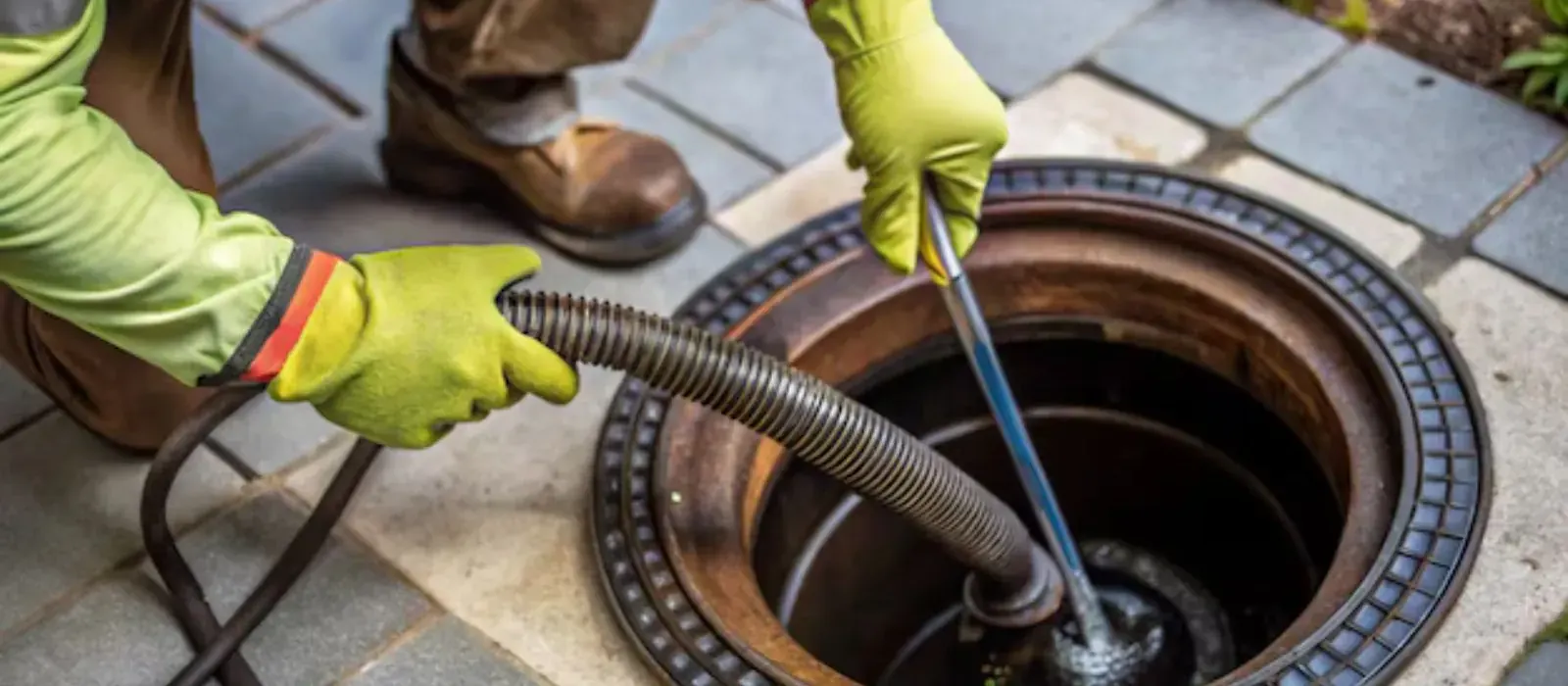
The product is a liquid or powder loaded with enzymes or live bacterial cultures. You pour it in, usually at night, and let it sit while the drain is idle. Over hours the organisms feed on the greasy film that coats the pipe walls. Professional drain cleaning does the opposite job, since it removes the blockage mechanically.
There is no fizzing, no heat and no fumes. That is the appeal. Enzyme products are gentler on the skin and on pipe materials than caustic or acid openers, and they do not produce the splash risk that makes a plumber wary of a drain that has been dosed with lye.
The catch is speed. A blocked sink will not clear in minutes, and a drain with standing water dilutes the product before it reaches the film.
What they can and cannot digest
Enzymes target organic matter: grease, oils, starch, food residue and soap scum with a fatty base. A slow kitchen sink with a coating of old cooking fat is the best candidate.
They do nothing to hair. They do nothing to a toy, a wipe, a piece of cloth or a mineral crust of scale. Tree roots entering a joint in a sewer lateral are alive and are not on the menu either.
A cracked or sagging pipe is not a cleaning problem at all. If waste is pooling in a belly in the line, no cleaner will lift it back into the flow.
Enzyme cleaner or a tool: a quick guide
Use this table to decide before you spend money on a bottle. The right choice depends on whether water is still moving.
| Drain condition | Enzyme cleaner | Better option |
|---|---|---|
| Smell, no slowdown | Reasonable maintenance | Clean the strainer and trap |
| Slow kitchen drain, greasy | Might help over days | Auger, then a cleaning if it returns |
| Slow bathroom drain, hair | Will not help | Pull the stopper, snake the trap |
| Standing water | Will not reach the clog | Plumber with a cable |
| Several fixtures backing up | Not a fix | Stop water use and call for a main line camera look |
Waiting days for a product to work is a poor plan when sewage can come up in the lowest drain.
Drain backing up now? Call (801) 207-7520 and a licensed plumber can book the next open appointment.
Call (801) 207-7520Grease and the North Davis Sewer District
Clearfield is on public sewer, served by North Davis Sewer District. The district says grease plugs and backs up sewer lines more than anything else, and it asks residents never to pour fats, oils or grease down a drain or toilet. Scrape pans into the trash instead.
It also states that disposal units, hot water and detergents do not stop grease from solidifying down the line. They only move it. The same logic covers any cleaner: a product that loosens grease at your sink may just push it to a pipe you cannot reach.
The district does not publish guidance on enzyme cleaners themselves, and EPA's advice on additives is written for septic tanks, not city sewers. The tie-back is plain. Treat an enzyme product as housekeeping for your own drain pipes, keep the grease out in the first place, and call a plumber when a line is already slow.
Source: North Davis Sewer District, What Not to Flush page (sewer district), and U.S. EPA septic system guidance (federal).
The septic caveat does not apply here
You may read that septic additives are a bad idea. EPA says products containing bacteria or chemicals, enzymes included, are not recommended for home septic systems because they can be ineffective or even harm how the system works.
That is advice for septic tanks. Clearfield homes connect to the district's sewer, so no tank in your yard is being upset. We do not service septic systems, so if your property is on one outside the city, ask a septic professional.
When the problem is the sewer line, not the sink
A single slow fixture points to a trap or branch. A slow tub, a gurgling toilet and a washer that backs up together point to the main line that leaves the house.
Grease, wipes and roots build up in that lateral over years. A plumber confirms it with a camera, then clears it through a cleanout using sewer line cleaning with a cable or a jetting head. Enzymes poured at a sink never reach that pipe in useful strength.
Homes in Sunset and Roy can show the same pattern when roots find a joint. A camera shows whether the pipe is sound before anyone picks a cleaning method.
What drives the cost of clearing a greasy drain
Pantry fixes are cheap, and plumber visits vary. These are the factors that set the final figure.
- Fixture or main line
- A sink trap is a small job. A main line or lateral cleaning uses more cable and more time.
- Type of blockage
- Soft grease clears easily. Roots, scale and compressed wipes need cutting heads or jetting.
- Access
- A cleanout outside the house saves time. No cleanout means working through a toilet or a roof vent.
- Camera inspection
- Looking inside the pipe adds a step but shows whether a repair is needed after cleaning.
- Timing
- Same-day and after-hours calls are scheduled differently from a booked visit.
Insurance usually covers sudden and accidental damage, not a clog caused by buildup over time. If sewage reached a floor, read your policy first.
You will hear a clear price before work starts. Call (801) 207-7520 to book.
A sensible way to use one
Use an enzyme product only on a drain that still flows. Clean the strainer, pull visible hair, then pour the dose at bedtime and run no water until morning.
Repeat on the schedule printed on the label, and judge it by the smell and the drain speed over a few weeks. If nothing improves, the cause is not food film. Stop buying bottles and have the line checked.
Enzyme cleaner questions
Do enzyme drain cleaners work on grease clogs in the sewer line?
Not in a meaningful way. They act slowly on thin organic film near where you pour them. Grease that has hardened in a main line is far from your sink, so the product is diluted. The sewer district says hot water and detergent only move grease along. Stopping grease at the source works better.
How long does an enzyme drain cleaner take to work?
Hours at a minimum, and often several doses over days or weeks. The label usually says to pour it at night and leave the drain unused. If the sink is blocked now, a cable is faster.
Are enzyme drain cleaners safe for plumbing?
Generally yes for metal and plastic pipes. They are milder than caustic openers. Keep them away from skin and eyes and never mix them with other cleaners.
Can enzyme cleaner remove tree roots?
No. Roots are living plants and enzymes do not digest them. A plumber uses a camera to see the roots and a cutting head to clear them. Pipe repair may follow if the joint is open.
Is enzyme cleaner better than a chemical drain opener?
It is gentler but much slower. A caustic opener acts fast on some clogs but can burn skin, harm old pipes and make a later plumber's job risky. Neither fixes hair or a collapsed line. A cable is the safer tool.
Does an enzyme cleaner harm a septic tank?
It can. EPA advises against septic additives containing bacteria or chemicals. We do not service septic systems. Clearfield homes on the city sewer are not affected.