When a clogged drain turns into an emergency
Most clogs are a nuisance. A few are not. Water rising in a tub while the washer drains, a basement floor drain that bubbles, or a toilet that gurgles when you run a sink all point to a blockage deeper than one fixture, and sewage can follow within minutes.
Stop running water first. Every gallon you add has nowhere to go, so skip the washer, dishwasher and showers until the line moves. Keep chemical openers in the cabinet, since they can sit in a standing pool and burn skin.
Night and weekend calls are normal for this work. When a same-day appointment is available, the dispatcher books a licensed plumber for it, and no arrival time is promised because it depends on the call queue. If water is already near outlets or a basement panel, stay out of that area and say so on the phone. The same line dispatches to neighbors in Layton and Clinton.
Reading the signs: one clog or a blocked main
Where the symptom shows up tells the plumber where to start. A single slow sink usually means a clog in that fixture's own branch. Several fixtures acting up together point to a shared line.
- One sink or tub drains slowly while everything else is fine: a branch clog, usually hair, soap scum or food.
- A gurgle from a toilet or tub when another fixture drains: air is being pushed past a blockage in a shared line.
- Water in the lowest tub, shower or floor drain after laundry runs: the main drain is restricted.
- A sewer smell near a floor drain that comes and goes: a dried trap, or a partial blockage letting gas rise.
- The same sink clogs again within weeks: the clog was punched through, not removed.
None of this needs guesswork. The plumber confirms the location in minutes by opening a cleanout, running a cable and noting where it stops. When a bubbling toilet is the first clue, the notes on clearing the main sewer line apply as well.
What Clearfield housing and the sewer district say about clogs
Clearfield's homes are not new. The Census Bureau counts 12,042 housing units here with a median build year of 1989, and about 4,732 of them, roughly 39 percent, were built before 1980. Drain lines in those older houses have had decades to collect grease and soap film on rough pipe walls, so a clog there often returns until the line is scoured and not just opened.
North Davis Sewer District, which serves Clearfield, says fats, oils and grease plug and back up sewer lines more than anything else, and that neither a garbage disposal nor hot water and detergent stops it. It also lists baby wipes and so-called flushable wipes as things never to send down a drain. Treat those two habits as the first suspects when a kitchen line or a toilet branch clogs.
Source: U.S. Census Bureau American Community Survey 2020 to 2024 housing tables and the North Davis Sewer District What Not to Flush page.
Drain snaking and cabling: what the plumber actually does
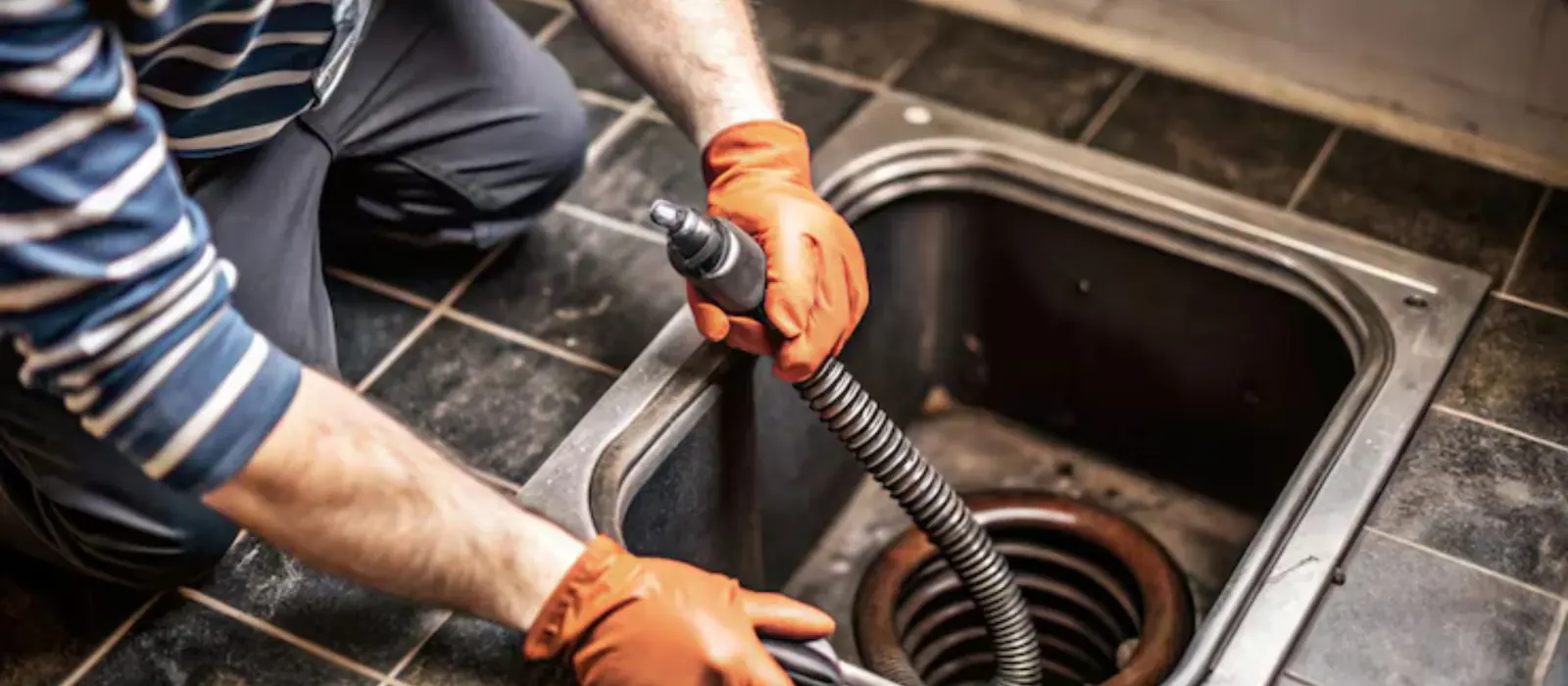
Snaking means feeding a flexible steel cable into the drain until it meets the blockage, then turning it so the head hooks or cuts through. Small hand augers handle sinks, tubs and shower drains. Drum machines carry the longer, thicker cable used for floor drains and 3 or 4 inch branch lines.
Sink, tub and shower drains
Hair wrapped around the stopper linkage or caught below the tub shoe is the most frequent find, and it comes out in a wad on the cable head. The plumber then runs hot water for a few minutes to confirm the drain flows at full speed.
Floor drains and branch lines
Floor drains in basements and garages take a heavier cable because the trap is deep and the line often runs under the slab. Cutting heads chew through roots and packed debris, and the plumber pulls back what the cable catches.
A cable opens a channel through the clog. It does not always scrape the pipe wall clean, so grease can rebuild around the channel. When that is the pattern, hydro jetting washes the full wall and is the better second step.
Kitchen sink clogs: grease, food and the disposal
Kitchen drains clog differently from bathroom drains. Cooking fat cools in the trap and in the horizontal run behind the wall, then hardens into a paste that catches rice, coffee grounds and potato peel. A double-bowl sink adds a second tailpiece and a dishwasher connection, which gives debris more places to settle.
Start with the simple checks. Clear the disposal chamber with the power off, plunge with the other bowl blocked by a wet rag, and look at the dishwasher high loop if its drain is backing into the sink. If water still stands, the clog sits beyond the wall and a cable machine is the right tool.
Do not count on hot water and dish soap to fix grease that has already set. The district notes that they only move it farther down the line. The plumber clears the blockage and tells you whether the disposal or the dishwasher hookup is feeding the problem, and a jammed disposal has its own page on garbage disposal repair.
Choosing between a plunger, a cable and a water jet
The right tool depends on what is in the pipe and how far away it sits. This is how the choice usually runs.
| Situation | Usual tool | Why it fits | Where it falls short |
|---|---|---|---|
| Slow bathroom sink or tub | Hand auger | Reaches hair and soap near the fixture | Does not clean the pipe wall |
| Kitchen sink with standing water | Cable machine | Cuts set grease past the wall | Grease can reform around the channel |
| Several fixtures slow or gurgling | Cable at the cleanout | Reaches the shared branch or main | Needs a cleanout or a pulled toilet |
| Same clog every few weeks | Hydro jetting | Scours scale and grease off the wall | A damaged pipe may need repair first |
| Clog plus a wet spot or odor | Camera inspection | Shows a crack, offset or break | Cleaning alone cannot close a break |
A tool is chosen after the plumber knows where the blockage is, not before.
Drain quit at 11 p.m. or on a Sunday? Call (801) 207-7520. The line is open all night, and licensed plumbers take same-day appointments when available.
Call (801) 207-7520Drain line leaks: when a clog is really a break
Sometimes the water that will not drain is escaping instead. A cracked or separated drain line leaks into the soil or the wall cavity, which shows up as a clog that keeps returning, a soft spot in the floor, a musty smell, or a damp stain under a bathroom. A cable machine clears the pipe but cannot close a gap.
When the same drain stops within weeks and the cable finds a bend, a gap or a sagging section, the plumber will suggest a camera look. That step, described under sewer camera inspection, shows where the line failed so the repair covers only what needs it.
What decides the cost of drain cleaning
A price depends on the job, which is why the plumber looks before quoting. You get a clear price before work starts, and these factors explain where it comes from.
- Where the blockage sits
- A clog right at a sink trap is quick. One far down a branch line takes longer, and one in the main is a different scale of job.
- Which tool the job needs
- A hand auger, a drum cable machine and a water jet differ in setup time, and the plumber picks the lightest tool that will do the work.
- Access to the line
- A cleanout makes the work simple. If a toilet must be pulled or a trap arm removed to reach the line, labor grows.
- What the blockage is
- Soft debris comes out fast. Packed roots, a dropped toy or hardened grease take more passes.
- Whether a camera is needed
- If the drain keeps clogging, a camera look finds the reason, and that is a separate step from clearing the line.
Insurance usually treats a clogged or worn line as maintenance, not a covered loss. Damage from a sudden and accidental event, such as an overflow that ruins flooring, may be covered if your policy includes that protection, so read the policy or ask your agent.
Call (801) 207-7520 to describe the symptom, and the plumber will explain the options and the price before any work starts.
What drain cleaning cannot fix
Cleaning removes what is in the pipe. It cannot repair the pipe. A camera can reveal a belly where the line sags and holds water, roots that have entered a joint, or a collapsed section, and none of those is cured by a cable alone.
We do not treat septic systems. If the cable stops at a solid obstruction that does not give, the plumber will say so instead of forcing it, and the next step is a camera and a talk about sewer line repair.
Drain cleaning questions Clearfield homeowners ask
Do you handle drain cleaning emergencies at night or on weekends in Clearfield?
Yes. The dispatch line at (801) 207-7520 is answered 24/7, including nights, weekends and holidays. When a same-day appointment is available, a licensed plumber is booked for it. We do not promise an arrival time, because it depends on the call queue. While you wait, stop using water on the affected line and keep the disposal off.
How can I tell whether the clog is in one drain or the main line?
Watch how many fixtures react. One slow sink with every other drain normal is a branch clog. A bubbling toilet, a tub that fills when the washer drains, or a basement floor drain that rises points to the shared line. Tell the dispatcher what you see and the plumber arrives ready for that case.
Is it safe to pour drain cleaner before the plumber comes?
It is better not to. Caustic openers seldom clear a dense mass of hair and grease, and they leave a harsh liquid in the trap that can splash when the cable goes in. If you already used one, tell the plumber the product and the time so the work is done with that in mind.
Can snaking damage my pipes?
A cable can scratch a fragile old line if the wrong head is used or the plumber forces it. The plumber matches the cutter to the pipe size and material and stops when the cable meets something solid. If a pipe is already cracked, cleaning can expose it. The answer is then a camera look and a repair plan.
What should I never put down a kitchen drain in Clearfield?
North Davis Sewer District says fats, oils and grease do the most harm to sewer lines. Scrape pans into the trash, wipe grease with a paper towel, and keep paint, solvents and medicines out of every drain. A garbage disposal grinds food but does not stop grease.
Does a clog that keeps coming back mean something is wrong?
Often it does. A repeat clog can mean grease coating the pipe wall, roots at a joint, or a sagging section that holds water. The plumber can step up from a cable to a jet or a camera based on what the first visit finds. Options and price come before any work.