
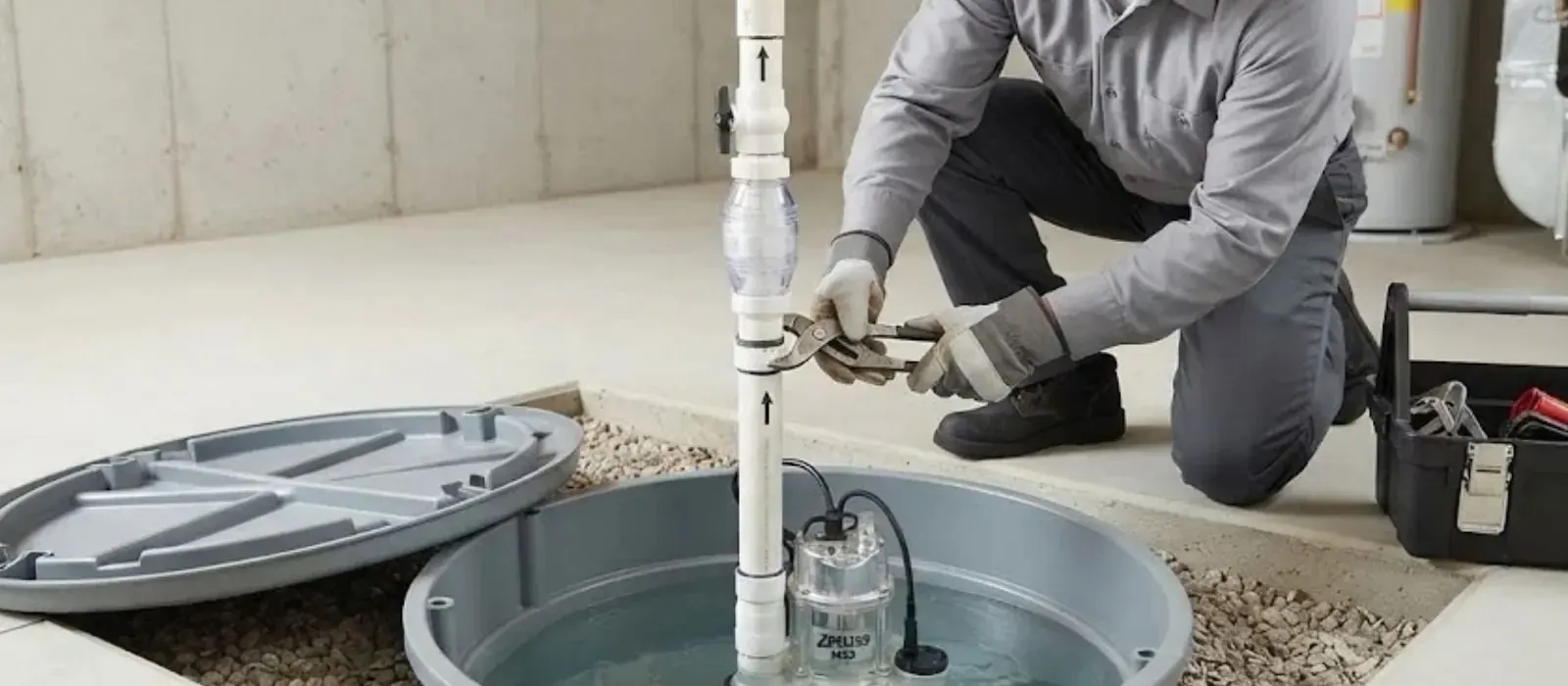
When a failed sump pump is an emergency
A dead pump matters most when water is rising in the pit. At that point you have a limited window before it spills onto the slab, and that window shrinks in a spring melt or a heavy storm.
Check the plain things first: is the pump plugged into a live outlet, has the GFCI tripped, did a breaker flip? If it will not restart, call. Late-night and weekend calls get the same dispatch as daytime ones, and we send a licensed plumber as soon as scheduling allows.
- Do not touch the pump or cord while standing in water.
- If water is at the outlet level, leave the breaker alone unless you can reach the panel standing dry.
- Lift stored items, rugs and electronics off the floor.
- Bail or wet-vac the pit if it is safe to reach. Even a small lowering of the level buys time.
- Note whether the water in the pit is clear or smells like sewage. Sewage points to an ejector pump, a different problem.
Shallow groundwater, city code and the sewer rule
The Utah Geological Survey warns that shallow groundwater, generally within 10 feet of the surface, can occur anywhere in Utah and is more likely in low-lying valley areas. It rises and falls with seasonal precipitation and irrigation, can seep into basements, and the survey recommends inspecting sump pumps annually before the wet season. Spring is when the pit works hardest, so a pump that stalls in April matters more than one that stalls in August.
Clearfield City Code requires a house footing to sit at least 2 feet above the highest water table, or a foundation drain that discharges to a positive drainage system. That drain is what feeds many sump pits. If the pit is your drainage system, the pump is not optional equipment, it is the thing keeping the foundation dry.
North Davis Sewer District's ordinance bars groundwater sump pump discharge from entering the sanitary sewer. That rules out the tempting shortcut of piping a pit into a floor drain or sewer cleanout.
Source: Utah Geological Survey Public Information Series 105 (Shallow Groundwater Hazard in Utah), Clearfield City Code 10-1-4, and North Davis Sewer District ordinances adopted October 2025.
Why sump pumps stop working
Most pump failures fall into a short list. Each leaves different clues in the pit.
Float problems
A float that jams against the pit wall or the discharge pipe will keep the pump from starting, or will keep it running dry. The switch can also fail inside its housing, so the float lifts and nothing happens.
Clogged intake or impeller
Silt, gravel and debris wash into the pit. A pump that hums but moves little water is often fighting a jammed impeller or a clogged screen.
Failed check valve
The check valve on the discharge line stops water from falling back into the pit. When it fails, the pump short-cycles, pushing the same water up and watching it return. You may hear a loud thump each time.
Power loss
Storms that fill the pit also knock out power. A pump with no backup is only as reliable as the grid on the worst night of the year.
Plain wear
A pump that has worked through many wet seasons eventually burns out its motor. Running for hours with no rest, or running dry, shortens its life.
Code limits that shape a sump pump fix
North Davis Sewer District bars sump and groundwater discharge to the sanitary sewer, and Clearfield's storm drains take storm water only. Clearfield City's 2026 design criteria list the 2024 International Plumbing Code as the adopted plumbing code, effective July 1, 2026.
Before replacing a pump, confirm where the discharge pipe ends. A tidy new pump that dumps into the wrong place creates a violation, not a dry basement.
Pump quiet when the pit should be draining? Call now, any hour.
Call (801) 207-7520Reading the symptoms: pump behavior, cause and fix
What the pump does tells a plumber where to look first.
| What you notice | Likely cause | Usual fix |
|---|---|---|
| No sound, pit full | Power, GFCI or float switch | Restore power or replace switch |
| Hums but moves no water | Jammed impeller or airlock | Clear intake or replace pump |
| Runs without stopping | Stuck float or undersized pump | Free the float or resize |
| Short bursts, loud thump | Failed check valve | Replace the valve |
| Water in pit never drops | Frozen or kinked discharge line | Clear or reroute the line |
| Sewage smell, sealed lid | Ejector pump fault | Service or replace the ejector |
A pump that runs constantly in dry weather can also mean a leaking supply line or a high water table, not a bad pump.
Sump pump or ejector pump
A sump pump moves groundwater and drain-tile water out of a pit in the floor. An ejector pump lifts sewage and wastewater from a basement bathroom, laundry or bar up to the main drain line, and it sits in a sealed pit with a vent.
The difference matters when a pump quits. A failed sump pump floods a basement with groundwater. A failed ejector pump pushes waste back up through the basement fixtures. If the second is happening and the main line is the cause, see sewer line repair.
Repair it or replace it
A pump with a stuck float, a failed switch or a bad check valve is usually worth repairing. The pump itself is fine and the cheap part is the problem.
A pump with a burnt motor, a cracked housing or a corroded casing is a replacement. Repairing something that has already worn out buys a few weeks, then fails again in the next storm. If the pit itself is cracked, undersized or choked with silt, the plumber will tell you before installing a new pump into a bad pit.
Ask about a battery backup and a high-water alarm at the same visit. A backup pump buys hours, not days, in a long outage. It does not fix a grid failure, but it covers the worst night.
Where the pump water goes
Discharge should end well away from the foundation, or it recirculates into the same drain tile. Frozen discharge lines are common in winter, because the pipe sits partly exposed. A pump that cannot push through ice will overheat.
Clearfield's storm water page says only storm water should enter the storm drain, and the city does not publish sump guidance there. Discharge rules vary by property, so ask Clearfield City Public Works where yours may legally go.
A spring test that takes five minutes
Ogden-area NOAA normals show about 16 inches of precipitation a year, with 1.97 inches in April and 2.17 inches in May on average. That spring stretch is when pits fill, so test the pump before it.
Pour a bucket of water into the pit and watch. The float should lift, the pump should start, the pit should drain, and the check valve should hold without a thump. Check that the discharge line is clear and its outlet is not buried or iced. A pump that fails any of these will fail again under load.
What shapes the price of sump pump work
A switch swap and a full pit rebuild are different jobs. These are the factors.
- Repair versus replacement
- A float or check valve costs far less than a new pump, and a worn-out motor is not worth repairing.
- Pump type and size
- Submersible, pedestal and ejector pumps differ in cost and in how much water they can lift.
- Pit condition
- A cracked, silted or undersized pit may need work before a pump can do its job.
- Discharge line
- Replacing a frozen, kinked or leaking line adds pipe and time.
- Backup and alarm
- A battery backup or high-water alarm adds equipment and a dedicated outlet.
Water damage from a pump that failed suddenly is sometimes covered, but seepage, groundwater and wear are often excluded. A separate sump or water-backup endorsement is common, so read your policy or ask your agent.
You get a clear price before work starts. Call (801) 207-7520 for same-day service when available.
When the pump is not the problem
A working pump cannot stop water that comes through the foundation wall, the floor joint or a window well. That is a drainage and waterproofing job, covered under basement waterproofing. We also do not install a pit where none exists without looking at the whole foundation.
If the basement is wet but the pit is dry, the water may be from a pipe. A plumber can run a leak detection check on supply and drain lines before you blame groundwater. We take the same calls from Clinton and Roy.
Sump pump questions from Clearfield basements
Do you handle sump pump emergencies at night or on weekends in Clearfield?
Yes. The dispatch line is open 24/7. A licensed plumber is sent as soon as scheduling allows, and we do not promise an arrival time. A storm that floods one street usually floods many. Tell us whether the pit is rising so we can prioritize.
Why is my sump pump running when it has not rained?
Snowmelt, lawn irrigation and a high water table can all feed the pit. A stuck float can also keep the pump on. Check whether the pit is actually filling. If it is dry and the pump runs, the float is the culprit.
Does my sump pump need a battery backup?
If the basement is finished or holds anything you would hate to lose, yes. Storms that fill the pit also cut power. A backup buys hours of pumping, so pair it with a high-water alarm that tells you to act.
Where should the sump discharge line end in Clearfield?
Away from the foundation, never into the sanitary sewer. North Davis Sewer District bars sump discharge from the sewer. Beyond that, rules vary by property, so ask Clearfield City Public Works before you route it to the street or storm drain.
Is a sump pump the same as an ejector pump?
No. A sump pump removes groundwater from a pit. An ejector pump lifts sewage from a basement bathroom or laundry up to the main line. Their pits, lids and failure symptoms differ, and an ejector failure means sewage rather than clean water.
How often should I test my sump pump?
At least once a year before the spring wet season, as the Utah Geological Survey recommends. Many homeowners add a second test in fall. Pour in a bucket of water and confirm it starts, drains and stops without a thump.
Does insurance cover flooding from a failed sump pump?
Sometimes. Coverage usually depends on whether the failure was sudden and whether you carry a water backup endorsement. Seepage and groundwater are commonly excluded. Photograph the pit and keep the old pump, then call your agent.