
When a leak is an emergency
Treat it as urgent when water is spreading, a ceiling is sagging, or water is near outlets or the breaker panel. Close the main shutoff, usually where the line enters the house near the water heater. Then open the lowest faucet to relieve what is left in the pipes.
Dispatch runs around the clock, and same-day appointments are offered when the schedule allows. The plumber starts by confirming where the water comes from before anyone cuts drywall.
- Stay out of any room with a bulging ceiling, because trapped water is heavy.
- Cut power to a wet area at the panel only if you can reach it dry.
- Photograph the damage and move rugs and electronics out of the wet zone.
Meter still running or the water bill jumped
The EPA's WaterSense program suggests reading your meter, using no water for two hours, and reading it again. If the numbers moved, water is going somewhere. EPA estimates nine percent of homes leak 50 gallons or more per day.
Rule out the cheap culprit first. Drop food coloring in each toilet tank and wait about 10 minutes without flushing. Color in the bowl means a worn flapper, a fixture job handled under toilet repair or faucet repair.
Clearfield bills on tiered conservation rates, so a steady loss pushes a household into higher tiers faster than a one-time overage. A clean dye test plus a moving dial means the leak sits in a line you cannot see.
Meter moving with everything off? Call (801) 207-7520 and a licensed plumber will tell you what to check next.
Call (801) 207-7520Signs of a hidden leak you can see, hear or feel
Callers seldom open with the words leak detection. They describe what the house is doing.
- A warm patch on a floor, pointing to a hot line below.
- Running or hissing water when every fixture is off.
- Pressure that fades over weeks instead of overnight.
- A musty smell in a closet or cabinet with nothing visibly wet.
- Paint that bubbles or a ceiling stain that grows after a shower.
One sign alone proves little. A warm floor plus a moving meter justifies sending a plumber with listening gear.
What Clearfield winters and older homes do to pipes
NOAA's 1991 to 2020 normals for the Ogden-Hinckley station, about 12 miles north, show 121 nights a year at or below 32F. Clearfield's permit criteria list a 30 inch frost line. Lines in garages, exterior walls and unheated crawlspaces crack or loosen at fittings, then leak at the thaw, so check those first after a hard cold snap.
Census data counts 12,042 Clearfield homes with a median build year of 1989, and about 4,732 of them, roughly 39 percent, predate 1980. Valves, connectors and original supply lines in those homes have had the most years to wear, so a leak in a 1970s house deserves a look at fittings as well as pipe.
City code requires footings two feet above the highest water table or a foundation drain, and Utah Geological Survey notes shallow groundwater can occur anywhere in Utah. A damp basement wall is therefore not always plumbing, and a good visit rules groundwater in or out before anyone digs.
Source: NOAA NCEI 1991 to 2020 Normals, Clearfield City design criteria and city code, U.S. Census Bureau ACS 2020 to 2024, Utah Geological Survey.
How the plumber finds the leak without tearing things open
The plumber closes the main, watches the dial, then isolates the cold side, hot side and any irrigation branch one at a time. A pressure gauge on a hose bib shows whether each isolated section holds.
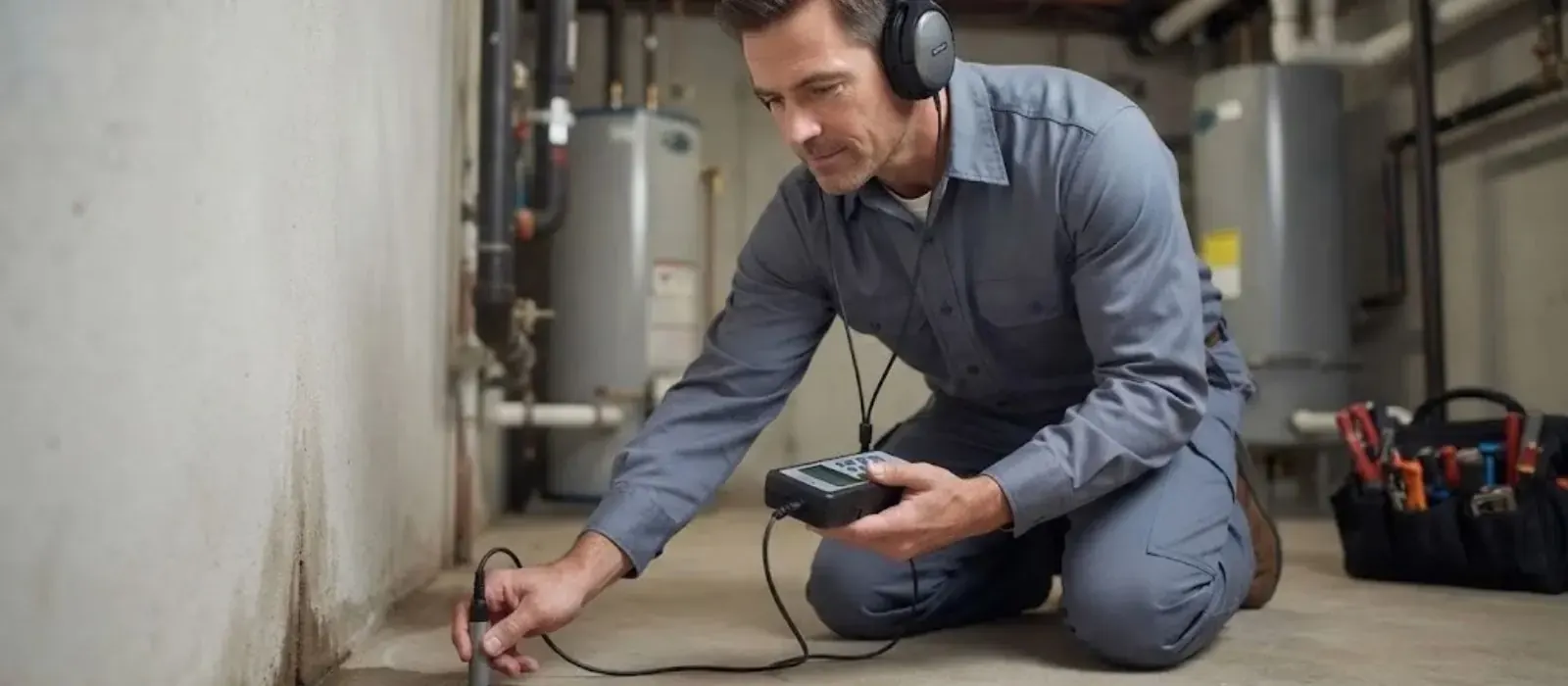
Next comes listening. A ground microphone picks up the hiss of pressurized water, loudest directly over the break. Thermal imaging shows warm bands where a hot line crosses a floor, and a moisture meter confirms which materials are wet.
On drain lines a camera shows cracks and offset joints. That camera cannot find a pressurized supply leak behind drywall, which is why the methods are combined.
Ceiling and wall leaks
A stain under an upstairs bathroom is urgent because drywall holds water until it fails. If the stain feels soft or bulges, poke a small hole with a screwdriver over a bucket so it drains in a controlled way.
Not every stain is plumbing. A roof leak after snowmelt looks similar, but a plumbing leak keeps growing on dry days and tracks with showers or dishwasher cycles. The plumber runs each fixture above the stain and confirms with a moisture meter. Access is usually a hole the size of a dinner plate.
Crawlspace and under-house leaks
Cupped flooring, a musty smell at the vents, sagging insulation and a running meter with a quiet upstairs all point down. Mold and pests follow standing moisture.
With 121 freezing nights a year in the area, an unheated crawlspace with bare supply lines can drip all winter unseen. The plumber crawls the space with a light and checks each joint and hanger, and the fault is often at a fitting.
Buried line leaks between the meter and the house
A break may show as a soft wet patch in the lawn, a drop in pressure, or only a meter that never stops. Water follows gravel and sand, so the wet spot can sit several feet from the break, and a ground microphone pins it down better than digging at the puddle.
Before any dig, Blue Stakes of Utah must mark buried utilities. Dial 811 at least three business days ahead, and note that the person digging places the request. Confirmed breaks are repaired as described on our water line repair page.
Slab leaks and what the repair involves
Slab leak repair is covered here, from finding the line to fixing it. Signs include a warm floor spot, the sound of water under it, a bill spike, and dampness at baseboards. Hot lines are the ones you feel, because heat travels up through concrete.
A spot repair breaks a small opening above the leak and patches the concrete. Rerouting runs a new line through walls or the attic, and full repiping replaces the system when leaks keep appearing.
Clearfield's design criteria place the city in seismic design category D or D1, and joints where lines pass through footings are where shifting can stress a connection. Ask for a pressure test after any slab repair instead of trusting the first dry floor.
Choosing a repair once the leak is found
The right fix depends on where the line sits, its age, and how many leaks turned up. Treat this as a framework, not a quote.
| Where the leak is | Typical repair | Makes sense when |
|---|---|---|
| Pipe in a wall or ceiling | Cut out a section, new pipe and fittings | One failed spot in otherwise sound pipe |
| Crawlspace supply line | Replace a fitting, add hangers and insulation | The leak is at a joint, not widespread corrosion |
| Buried service line | Spot dig or full line replacement | One break (spot) or several breaks in an old line (replace) |
| Single leak under the slab | Spot break-in repair | The rest of the line is healthy |
| Multiple slab leaks | Reroute or repipe | A second leak after a spot repair |
Permit rules vary, so ask the Clearfield City building department. The city lists new and replacement plumbing lines among permit work, while swapping a fixture does not need one.
Sprinklers, pools and the meter box
Irrigation lines
Sprinkler leaks hide in valve boxes, at mower-cracked risers and at fittings that froze. The plumber pressure tests zone by zone. Clearfield requires a certified tester for backflow assemblies at installation, after major repair and at least annually.
Pools and spas
We test the buried lines between the equipment pad and the house. Leaks in a shell, liner or skimmer seal belong to a pool specialist, and we will say so.
Yard and meter-box leaks
Water in the meter box may come from the meter connection or from house-side fittings. Where the city's responsibility ends is a question for Clearfield City Public Works, so call them first if the leak sits at the meter.
What changes the cost of finding and fixing a leak
A clear price comes before work starts, and finding the leak and repairing it are separate decisions.
- Location and access
- A pipe in an open crawlspace is quicker to reach than one behind tile or under a slab.
- Methods the search needs
- One wet wall may need only a pressure test. A mystery bill spike can need isolation tests, listening gear and thermal imaging.
- Pipe material and age
- Copper, PEX and galvanized steel repair differently, and brittle old pipe may break further when touched.
- Depth and surface to restore
- A leak under a lawn or driveway adds excavation, backfill, patching and 811 notice time.
- Urgency and timing
- Same-day or overnight work changes scheduling, and the price is still stated before work begins.
Insurance usually responds to sudden and accidental water damage, and often does not cover a slow leak from wear or corrosion. Some policies exclude the cost of locating the leak, so read yours or ask your agent before you authorize work.
Not sure where to start? Call (801) 207-7520 and describe what you see, hear or read on the meter.
When leak detection is not the answer
We will not invent a leak the tests do not support. Pressure that holds and a still meter point toward condensation, a roof or groundwater, and for seepage through foundation walls the better call is basement waterproofing. A camera alone cannot find a leak inside a wall.
We also do not treat septic systems, and a sewage overflow is a sewer line repair job. The same visits run in nearby Layton and Syracuse.
Leak questions Clearfield homeowners ask
Do you handle leak detection emergencies at night or on weekends in Clearfield?
Yes. The dispatch line is open 24/7, including nights, weekends and holidays, and a licensed plumber is sent when a leak cannot wait. We do not promise an arrival time. While you wait, close the main shutoff and stay away from wet electrical fixtures.
How do I check my water meter for a leak?
Make sure no fixture is running, read the meter, and wait two hours without using water. Read it again. If the reading moved, water is escaping beyond the meter. The toilet dye test rules out the most common cause before you call.
Can you find a leak inside a wall without cutting it open?
Often yes, to within a small area. Isolation tests narrow the line, a listening device finds the sound of escaping water, and a moisture meter confirms the wet zone. Cutting is still needed to repair the pipe, but it is usually a patch-sized opening.
Is a high water bill always caused by a leak?
No. Lawn watering, a filling pool or extra guests can raise a bill with no leak at all. The meter test settles it, because a dial that keeps moving with everything off means water is escaping.
Who do I call if the leak is at the meter or the street side?
Clearfield City runs its own water system through Public Works. If water is bubbling up at the meter or in the street, tell the city water department. Ask where their responsibility ends, then call us for anything on the house side.
Do I need a permit to repair a leaking water line in Clearfield?
Clearfield City lists new and replacement plumbing lines among permit work, while replacing a fixture does not need one. The city page does not say whether a small repair counts, so ask the Clearfield City building department before work begins.