The thawing method, in order
Do these steps in this order. Skipping the first one is how a thawed pipe floods a house.
1Shut off the main
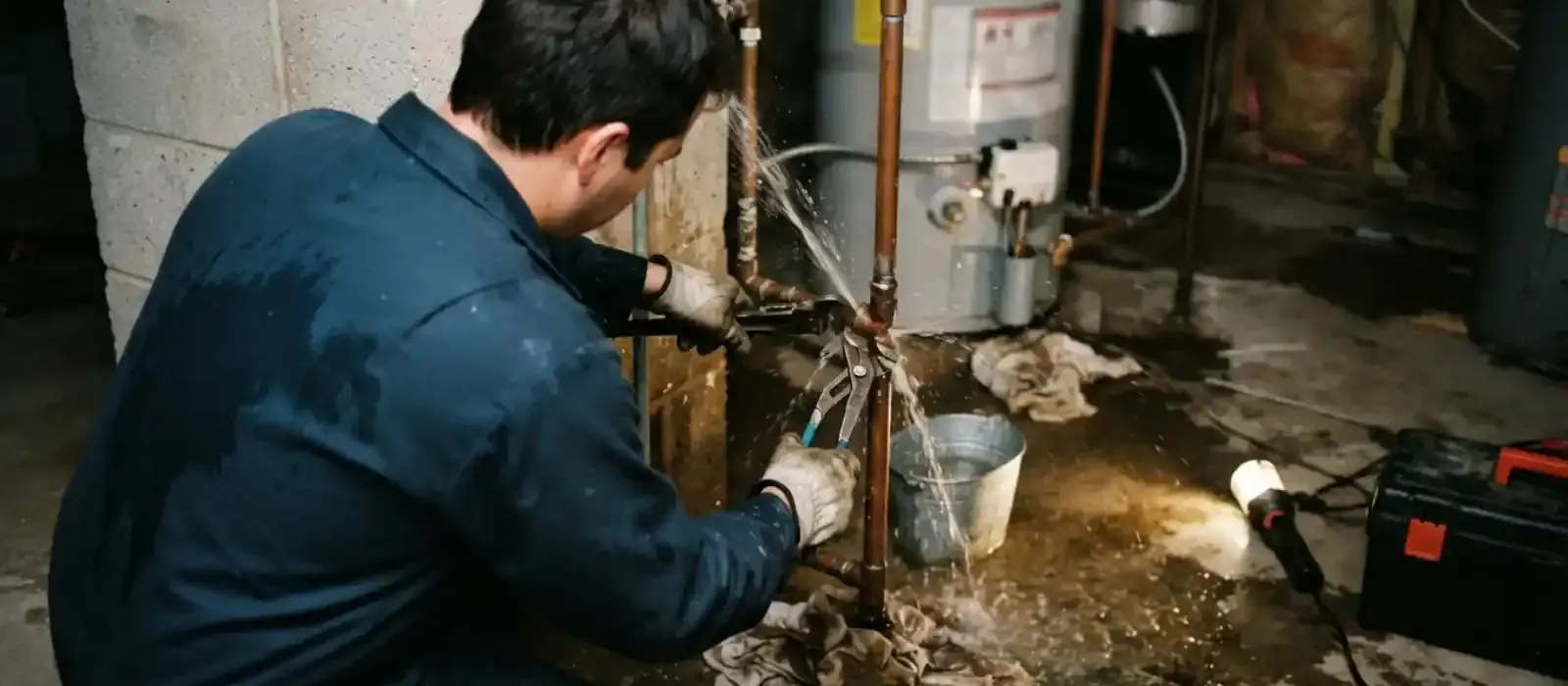
Find the main shutoff valve before you do anything else. If the pipe is already cracked, thawing will release water, and you want it stopped at the source. Keep a bucket and towels nearby.
2Open the faucet
Open the tap on the frozen line, hot and cold if it is a mixer. Melting ice needs somewhere to go, and an open tap relieves pressure as the pipe warms.
3Warm it from the tap backward
Start at the faucet end and move toward the frozen stretch. A hair dryer, heat lamp, warm towels, a space heater placed safely at a distance, or electric heat tape all work. Patience beats force here.
4Check for leaks, then restore water
When water runs freely, look along the pipe for cracks, wet drywall or drips. Turn the main back on slowly and watch. If anything leaks, close the main again and call.
Do not use a propane torch, a kerosene heater, boiling water or any open flame. Fast heat expands the ice and the metal at different rates, and open flame near a wall can start a fire inside it.
How often Clearfield pipes face a freeze
Ogden-area NOAA climate normals, from a station about 12 miles north of Clearfield, show 121 days a year with a low at or below 32 F. About 38 of those days reach 20 F or colder, and roughly 8 reach 10 F or colder. The median first freeze falls around October 22 and the median last freeze around April 22. That is a long season for any pipe in an unheated space.
Clearfield's own design criteria use a 30 inch frost line and a 10 F winter design temperature. Ground frost reaches that depth, and a pipe in an attic, garage wall, exterior wall or open crawlspace does not. These are the places to check first when a faucet goes quiet on a cold morning.
Clearfield City's water page also warns that freezing pipes can reduce pressure, so a weak flow in winter is a clue.
Source: FEDERAL, NOAA 1991 to 2020 climate normals for Ogden Hinckley Airport, and CITY, Clearfield City design criteria and water department pages.
First, work out which pipe is frozen
A trickle that stops, a faucet that coughs, or no water at one fixture while the rest work points to a localized freeze. If the whole house is dry, suspect the main or the meter area instead.
- Check the coldest places first: exterior walls, the garage, an unheated crawlspace, under a kitchen sink on an outside wall.
- Look for frost on a pipe or a bulge in it.
- Feel pipes with the back of your hand. The frozen section is colder than the rest.
- Try the hot and cold taps separately. If only cold works, the water heater side is fine.
A frozen hose bib or its supply line inside the wall is the most common culprit. Disconnect hoses in the fall so the bib can drain itself.
Can't find the frozen section or hear water running inside a wall? Call (801) 207-7520. The 24/7 line is open.
Call (801) 207-7520When thawing is the wrong call
Do not keep heating a pipe that has already split. If water sprays or pools when you open the main, close it and call. A thawed crack is a leak waiting to start, and a licensed plumber handles that on a burst pipe repair call.
Pipes inside a finished wall or ceiling are also a problem. You cannot safely heat them without opening drywall, and a heat source against a wall can ignite insulation or framing. A plumber can find where the pipe is frozen and where it has failed before you cut anything. Our leak detection work uses moisture meters and acoustic tools so the hole in the wall is the right size.
Signs the freeze has already done damage
Water stains on a ceiling below a bathroom, a pinging sound in the wall, a water meter that keeps moving when every tap is off, or a sudden drop in pressure after the thaw. Any of these means the pipe is leaking, so close the main.
Thawing methods: what is safe and what is not
Heat sources are not equal. This table sorts them by how well they fit a frozen household pipe.
| Method | Verdict | Notes |
|---|---|---|
| Hair dryer | Safe | Start at the faucet, keep it moving, never leave it unattended |
| Warm towels | Safe | Slow, needs rewetting every few minutes |
| Heat lamp or space heater | Safe with care | Keep clear of walls and anything that burns |
| Electric heat tape | Safe | Follow the label, never overlap the tape |
| Boiling water poured on the pipe | Avoid | Fast temperature swing can crack the pipe |
| Propane torch or open flame | Never | Fire risk, and it can melt solder joints |
What a frozen pipe visit costs, in terms of factors
A frozen pipe can mean a quick thaw or a ruptured line in a wall. Five things set the total.
- Whether the pipe split
- Thawing costs little. A cracked section means cutting out and replacing pipe.
- Where the pipe is
- An exposed crawlspace pipe is easy. A pipe inside a finished wall needs access and patching.
- Pipe material
- Copper, PEX and older galvanized steel each repair differently.
- How much water got out
- Drying and drywall repair may fall outside plumbing work.
- Time of the call
- After-hours dispatch costs more than a scheduled visit, so ask how the price is built.
Homeowner policies often cover sudden and accidental burst-pipe water damage. They may exclude damage from neglect, such as heat left off in a vacant house. Read your policy and call your insurer before major repairs.
Call (801) 207-7520 for a clear price before work starts.
How to stop it happening again
Insulate exposed lines with foam sleeves and seal gaps around pipes where they pass through exterior walls. Utah State University Extension notes that insulation alone will not stop a prolonged freeze without heat or some flow, so open cabinet doors under sinks on exterior walls during a hard freeze. A slowly dripping faucet is a last resort.
Keep the heat on in unoccupied rooms, and keep your gas meter and exhaust vents clear of snow and ice, as the gas utility advises. If you smell gas, leave the building and call 911 or the gas utility from outside.
Homeowners in Clinton and Roy deal with the same cold stretch. You can read about service on our plumber in Clinton and Roy plumber pages.
Frozen pipe questions from Clearfield homes
How do I thaw a frozen pipe without breaking it?
Shut off the main, open the faucet, and warm the pipe slowly from the tap back toward the ice. Use a hair dryer, warm towels or a heat lamp at a safe distance. Fast heat stresses the pipe, so avoid boiling water and flames.
How many nights a year does Clearfield freeze?
Ogden-area NOAA normals show about 121 days a year with a low at or below 32 F, and about 38 days at or below 20 F. The median first freeze is around October 22. The station is about 12 miles north, so your own street may run a little different.
How long does a frozen pipe take to thaw?
It depends on the length of ice and the heat you can apply safely. Expect a gradual job, not a few minutes. If you cannot find the frozen section or the pipe is behind a wall, stop and call.
Will a frozen pipe always burst?
No. Many freeze without splitting, but ice expands and can crack a pipe, often at a fitting. The split may only show after thawing, when water flows. That is why you thaw with the main closed and check for leaks.
Should I leave a faucet dripping overnight?
It can help on a very cold night. Flow keeps water moving, which resists freezing. It is a last resort and wastes water. Insulation and a warm space around the pipe do more.
Can I thaw a pipe inside the wall myself?
Usually not. You cannot see the pipe, and a heat source against a wall is a fire risk. A plumber can locate the frozen or cracked spot first and open only what is needed.