
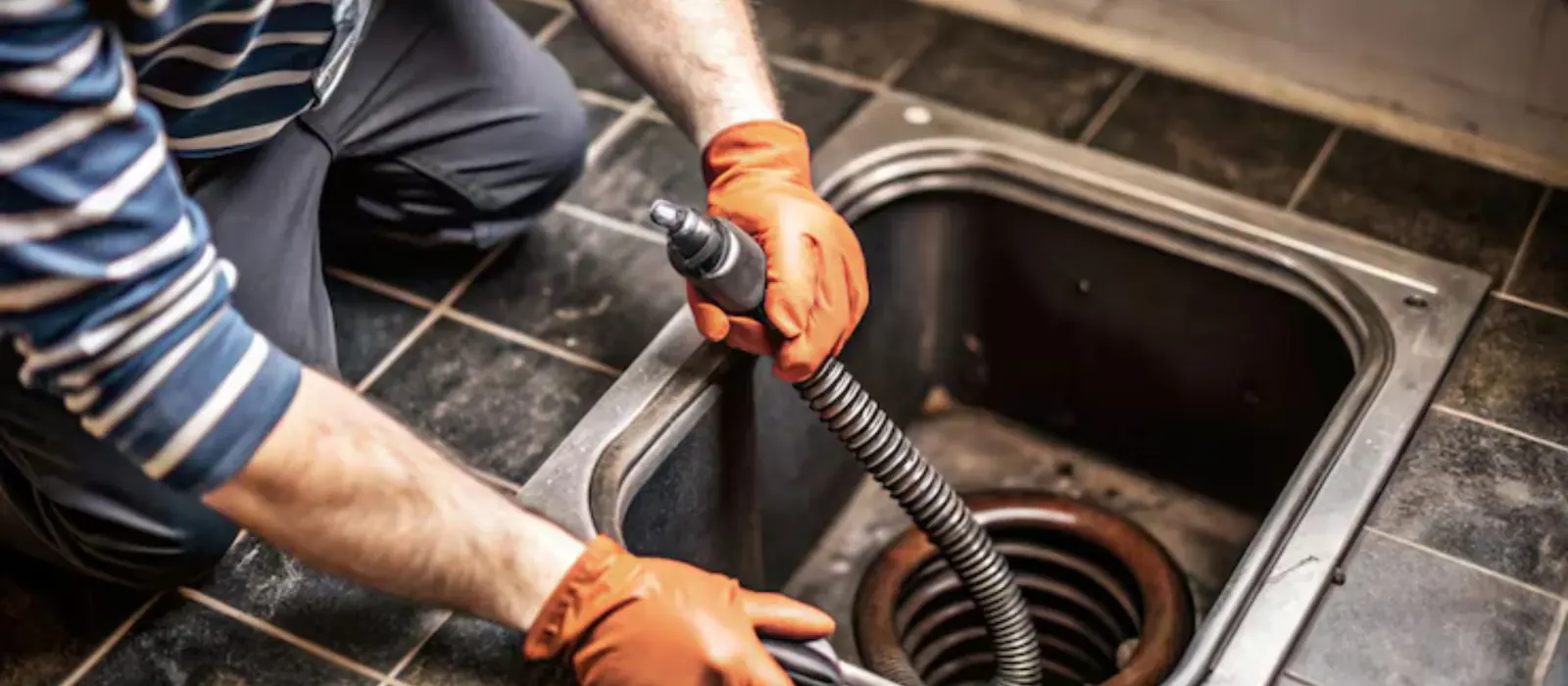
The short answer for a slow sink
Baking soda is a mild alkali. Vinegar is a mild acid. Together they fizz, and that fizz can push loose film off the walls of the drain pipe just below the strainer.
That makes the combination a decent freshener for a sink that smells a little sour or drains slightly slower than it used to. It is a poor choice for a sink that holds standing water, because fizzing in a full basin goes nowhere and the mixture sits in the trap.
The fizz itself is brief and gentle. It does not generate heat, pressure or enough chemistry to cut through hair, a wad of paper towel or a grease plug that has hardened in a cold pipe.
How to use it without making a mess
Start by removing what you can reach. Lift out the stopper or strainer basket, pull the visible hair and slime off it, and wipe the opening. Many slow bathroom sinks are fixed by this step alone.
Then run hot tap water for about a minute to warm the pipe. Pour half a cup of baking soda into the drain, followed by half a cup of white vinegar. Plug the opening with the stopper or a rag so the fizz works downward.
Wait ten to fifteen minutes, then flush with a kettle of hot, not boiling, water. If your sink has PVC drain pipes under the cabinet, very hot water on a softened joint is a bad idea, so stay with tap-hot water.
- Remove the stopper or strainer and clean it first
- Half a cup of baking soda, then half a cup of white vinegar
- Plug the opening and wait ten to fifteen minutes
- Flush with hot tap water and test with a full basin
What the fizz does not touch
Hair knits into a mat around the stopper arm and the first bend of the tailpiece. Vinegar does not dissolve keratin in any useful way, so the mat stays put and keeps catching soap scum.
Cooking grease is the other big one. Cooled bacon fat and oil coat the pipe wall in a waxy layer that baking soda cannot break down. A grease clog usually needs mechanical clearing or hot water carrying a real degreaser.
Solid objects are a third category. A bottle cap, a child's hair tie or a chunk of food that slid past the strainer will sit in the trap until someone pulls it out by hand or with a snake.
Water not draining after a treatment? Call (801) 207-7520 and a licensed plumber can clear it today when appointments are open.
Call (801) 207-7520Which sink problem fits which fix
Match the symptom to the tool before you pour anything. This keeps you from wasting an afternoon on a clog that needs a cable.
| Symptom | Likely cause | Baking soda helps? | Better first move |
|---|---|---|---|
| Sour smell, water drains fine | Film on pipe walls and strainer | Yes, often | Clean the strainer, then fizz and flush |
| Slow bathroom sink | Hair and soap at the stopper or trap | Rarely | Pull the stopper, clean it, try a drain tool |
| Slow kitchen sink | Grease and food solids | Slightly at best | Hot water, then a hand auger |
| Standing water, one sink | Full blockage at trap or branch | No | Remove the trap or call a plumber |
| Gurgling or backing up in several fixtures | Blockage in a shared line | No | Stop using water, call for a camera look |
What goes down a Clearfield drain
Clearfield sits on the North Davis Sewer District system. The district's what-not-to-flush list names fats, oils and grease, baby wipes and so-called flushable wipes, paints and solvents, antifreeze and other toxic chemicals. It warns against anything that could plug a line and cause a backup.
Clearfield City Code 9-1-11 also bars flammable materials, petroleum products and any matter that could damage the sewer by chemical reaction. Neither source mentions baking soda or vinegar, so a household fizz is not something they address. The practical tie-back is simple: skip harsh chemical drain openers and never use gasoline or solvent on a clog, because both can break the rule and hurt the people clearing the pipe after you.
Source: North Davis Sewer District, What Not to Flush page (sewer district), and Clearfield City Code 9-1-11 (city code).
Kitchen sinks are a different animal
Pouring grease down the drain, even with hot water behind it, just moves the problem. The district says plainly that disposal units and hot water do not stop grease from solidifying down the line. Scrape pans into the trash instead.
If your kitchen sink drains slowly every few weeks, the pipe is probably narrowed by a layer of old grease. At that point a hand auger is only a temporary fix, and a professional cleaning or hydro jetting scours the pipe wall instead of poking a hole through the middle.
When to stop trying and call
Give a home remedy one honest attempt. If the water level has not dropped after a flush, do not stack more rounds on top of it.
Stop right away if more than one fixture is slow. A tub that gurgles when the kitchen sink empties, or a toilet that bubbles when the washer drains, points to a blockage in a shared line rather than a single trap.
Call a licensed plumber for drain cleaning when you see wastewater coming up in the lowest drain in the house, because that fixture is the first relief point for a main line problem. Neighbors in Clinton and Sunset call about the same pattern, and the clearing method depends on what sits in the pipe.
What decides the cost of a professional clearing
There is no flat price for a sink clog because the work varies a lot from one pipe to the next. These are the factors a plumber weighs before giving you a clear price.
- Where the clog sits
- A clog at the trap under the sink is a quick job. One past the wall tee or in the branch line takes more cable and more time.
- What the blockage is made of
- Soft grease and soap clear with a cable. Hard roots, scale or a compressed mat may need a different head or jetting.
- Access to the pipe
- A trap with a cleanout nearby is simpler than a sink with no access, where the plumber works through the fixture.
- How many fixtures are affected
- One slow sink is a small job. A shared branch or the main line means more footage and sometimes a camera look.
- Time of day
- After-hours and same-day calls are staffed differently from a scheduled visit, and the plumber explains that before work starts.
Most homeowner policies cover sudden and accidental water damage but not the slow wear or neglect that causes a clog. If a backup has already wet a floor, read your policy and ask your agent before cleanup starts.
You will hear the price before any work begins. Call (801) 207-7520 and a dispatcher will book the next open appointment.
Baking soda and sink drain questions
Does baking soda and vinegar really unclog a sink?
Only a very light film. The fizz loosens soap residue and freshens a drain, but it cannot dissolve hair, hardened grease or a solid object. If the sink holds standing water after one treatment, the clog needs a drain tool or a plumber. Another round of pantry chemistry will not change that.
How long should I leave baking soda and vinegar in a drain?
Ten to fifteen minutes is plenty. The fizzing stops within a minute or two, and waiting an hour does not make it stronger. Flush with hot tap water and check whether the basin drains at a normal pace. Stop there.
Can I mix baking soda with a commercial drain cleaner?
Do not. Mixing household products can release fumes or splash caustic liquid out of the drain. If a chemical opener was already used, tell the plumber before the trap is opened, because the standing water can still burn skin and eyes.
Can baking soda hurt my pipes?
Not in normal household amounts. It is gentle on metal and plastic drain pipes. The bigger risks are boiling water on softened PVC joints and repeated chemical openers. Keep to tap-hot water.
Is it fine to pour drain cleaner down my drain if I'm on North Davis Sewer District?
Be careful. The district asks residents to avoid paints, solvents, antifreeze, toxic chemicals and anything that can plug a line. It does not name drain cleaner or baking soda, and Clearfield City Code 9-1-11 bars matter that damages the sewer by chemical reaction. Mechanical clearing is the safer path. Ask the district if you are unsure.
What if the sink clogs again days after I clear it?
It is probably a partial blockage further down. You cleared the near end and left the rest. A longer cable or a camera can find it, and a plumber can tell you whether it is a branch clog or a main line problem. Call (801) 207-7520.