
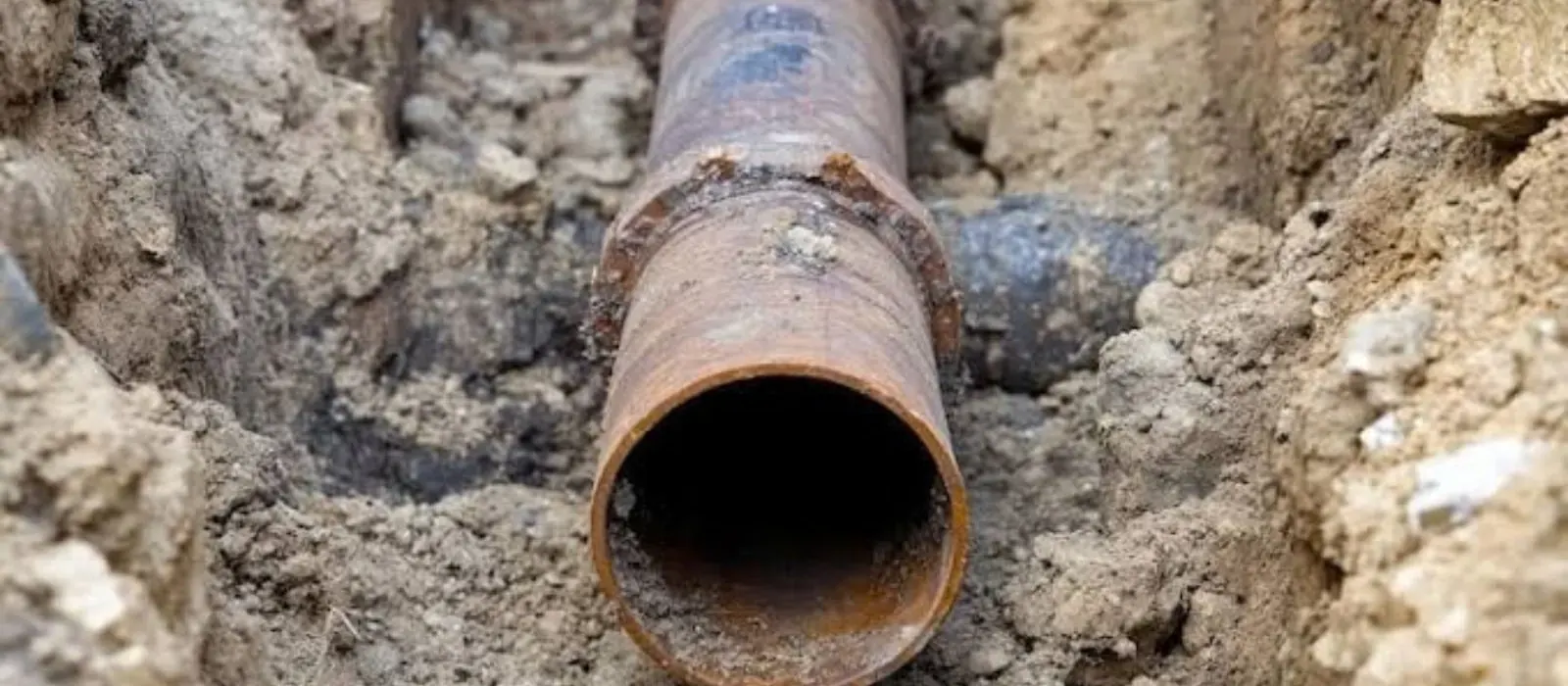
Where the money goes on a cast iron repair
Almost every quote splits into three parts: finding the problem, doing the repair, and restoring whatever had to be opened. The first and third often decide whether the bill stays small. Finding means a camera run plus a locator at the surface to mark depth. Restoration covers drywall, flooring, concrete or landscaping.
How to tell cast iron is the problem
Cast iron fails from the inside out. Rust scale builds up on the pipe wall, the bore narrows, and snags catch paper and grease. Eventually the bottom of the pipe rots through or a joint separates.
- Slow drains in several fixtures at once, not just one sink.
- A rotten-egg smell near a floor drain or in the basement or crawlspace.
- Gurgling in a tub or toilet when the washer drains.
- Repeat clogs a few months after a drain cleaning, with rust flakes on the cable.
None of these proves the pipe is cast iron. They are reasons to put a camera in the line first.
What Clearfield housing age tells you about your pipes
Census data for 2020 to 2024 puts the median Clearfield home at a 1989 build year, but 39.3 percent of the city's roughly 12,000 housing units went up before 1980. About 15.6 percent date from before 1960, and 987 units were built in 1949 or earlier. Those older homes are the ones most likely to still carry original drain piping.
The census does not record pipe material, so your build year is a clue and not a verdict. If your house was built before 1980, ask the plumber to confirm the material on camera, and treat anything newer as likely plastic until proven otherwise.
Sewer ownership matters for cost too. North Davis Sewer District rules say the property owner owns and maintains the building sewer, including the connection to the main. A failed run between your house and the street is your bill, not the district's. Replacing plumbing lines is also permit work in Clearfield, so ask the plumber how the permit will be handled.
Source: FEDERAL, U.S. Census Bureau ACS 2020 to 2024 housing tables, SEWER DISTRICT, North Davis Sewer District ordinances, and CITY, Clearfield City permit information.
Repair or replace: which branch you are on
The method matters more to the price than the pipe itself. Use this table to see which branch your situation points to, then confirm it with camera footage.
| Condition | Likely method | Why it fits | Cost direction |
|---|---|---|---|
| One cracked or leaking joint, pipe otherwise sound | Spot repair with a coupling | Only the bad section is opened | Lowest |
| Heavy scale but no breaks | Cleaning, then monitoring | Pipe still holds water | Low |
| Long run with scale and small cracks, straight and not collapsed | Pipe lining | Little or no digging | Middle to high |
| Collapsed, offset or bellied section | Dig and replace | Lining cannot fix a gap or a low spot | High |
| Cast iron under a slab | Reroute, tunnel or break slab | Access is the main cost | Highest |
A camera cannot tell you how thick the remaining wall is. It shows the inside surface, so a good plumber explains what they can and cannot see.
The cheap branch exists only when damage is small and reachable. Waiting after the first slow drain often pushes a spot repair into the lining or dig rows.
Want a plumber to look at the line on camera before you decide? Call (801) 207-7520. The 24/7 line is open now.
Call (801) 207-7520Pipe lining versus digging, in plain terms
Lining pushes a resin-soaked tube into the old pipe and cures it into a new pipe inside the old one. It avoids trenching, which is why it often wins under finished floors, patios and driveways. The old pipe must be clean and continuous first, so cleaning and a camera pass come before lining.
Lining has limits. It shrinks the inner diameter slightly, it cannot close a gap where the pipe has separated, and it cannot fix a sag where water pools. Digging costs more in restoration but gives you a new pipe with proper slope.
When digging is the better answer
A collapsed section, a belly that holds water, or several broken joints close together usually point to replacement.
When lining is the better answer
A long, straight run under a slab or finished space where the pipe is intact but rough. Our sewer line repair visits cover both options, so ask for each priced separately.
What moves a cast iron repair price
We do not quote numbers in an article, because the same pipe can cost very different amounts depending on the job. These are the factors every honest estimate is built from.
- Length of pipe involved
- A single joint and a forty foot run are different jobs. Camera footage sets the real length.
- Depth and what sits on top
- Exposed crawlspace pipe is quick. Pipe below concrete, landscaping or a driveway adds cutting and restoration.
- Repair method
- Spot coupling, lining and full replacement carry very different labor and material costs.
- Access and layout
- Tight crawlspaces, finished basements and pipes behind walls slow the work and add repair trades.
- Permit and inspection steps
- Replacement work is permit work in Clearfield, so ask who pulls it and when.
Homeowner policies usually cover sudden and accidental water damage, but often exclude wear, rust and gradual deterioration of the pipe itself. A burst that floods a basement may be treated differently from a pipe that simply rotted. Read your policy and call your insurer before work starts if you plan to claim.
For a written scope you can compare, call (801) 207-7520 and ask for the camera inspection first.
What to ask for on any cast iron quote
Ask for these items in writing so you can compare two plumbers line by line. If you want the camera step first, book a sewer inspection and use the footage for every quote.
- The camera footage or screenshots that show the failure.
- The exact length and depth of pipe being repaired.
- Which method is proposed, and why the other methods were ruled out.
- What is included for restoration of walls, floors, concrete or yard.
- Who handles the permit, and what inspection follows.
- What happens if the crew finds more damage than the camera showed.
Be careful with any price that arrives before the plumber has seen inside the pipe. A number given blind is a guess, and guesses rise once the dig starts.
Nearby homes that run into the same question
Roy grew fast in the 1940s and 1950s around Hill Air Force Base, so its older streets raise this question often. Our Roy plumbing page covers service there. Roy's own water plan says corrosive soils pushed the city toward PVC mains, so ask any plumber what soil may do to a buried pipe.
Sunset sits just north of Clearfield and shares the 84015 ZIP code. Homeowners there can read about our plumber in Sunset service.
When this is not a pipe replacement job
Not every slow drain means failing cast iron. A grease clog, roots at one joint, or a blocked vent can look the same from the sink. If a plumber recommends full replacement without showing you the pipe on camera, get a second look.
Cast iron repair questions we hear
My house was built in the 1960s, does it have cast iron pipes?
It may. Homes from that decade often have cast iron drain piping, though plastic replaced it in many builds over the following years. The census records when a house was built but not what it is piped with, so look at an exposed section or run a camera. A past remodel may also have swapped parts of the system.
Does lining a cast iron pipe cost less than replacing it?
Often, but not always. Lining saves digging and restoration, which are big parts of a replacement bill. It does not suit a collapsed pipe, a sag or a heavily offset joint. Ask for both options priced on the same footage and compare the total, restoration included.
How long does a cast iron repair take?
A spot repair on exposed pipe is a short job. Lining and replacement take longer because of cleaning, curing, digging, inspection and restoration. We will not promise a time before the pipe is on camera.
Will my homeowner insurance cover cast iron repair?
Policies differ. Many cover sudden and accidental damage and exclude wear, rust and slow deterioration of the pipe itself. Read the water damage and exclusions sections, and call your insurer before work begins if you intend to claim.
Can I fix a cracked cast iron pipe myself?
Small plumbing repairs to a fixture are one thing. Work that changes waste or vent piping is different, and Utah licensing rules do not exempt that kind of change. Cast iron is heavy, cutting it takes the right tools, and a bad joint leaks sewer gas. Call a licensed plumber.
Who pays for a failed sewer line between my Clearfield house and the street?
North Davis Sewer District rules make the property owner responsible for the building sewer, including the connection to the main. The district owns its collection mains. If the failure is on your side of that connection, the repair is yours to arrange.