
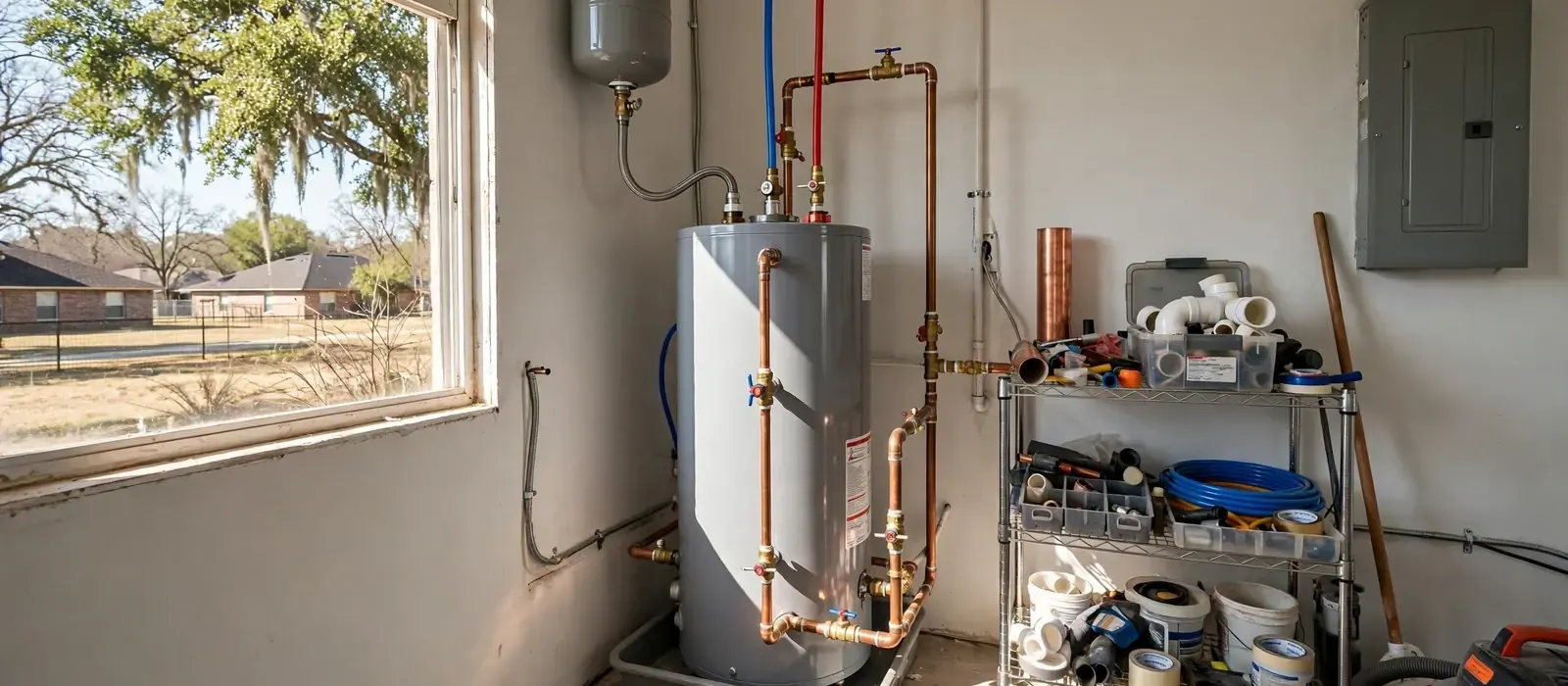
Decisions to settle before install day
Most installation problems are planning problems. Work through these with the plumber, and the day itself is straightforward.
- Fuel: natural gas, electric, or a heat pump hybrid
- Type: storage tank, condensing tank or tankless
- Size: matched to how many people shower, run laundry and the dishwasher at once
- Location: garage, closet, basement, attic or crawlspace, and whether it has to stay where the old one was
- Venting path for gas and condensing units
- Floor drain or drain pan, and where the relief valve pipe can discharge
Clearfield averages about 2.95 people per household, according to the Census Bureau, but your own number matters more. A family of six with teenagers and a soaking tub needs a different tank than a couple in a townhome.
The permit question in Clearfield
The city's list of work needing a building permit names water heater work, along with new or replacement plumbing lines and gas lines. Swapping a fixture does not need one. Permit fees and the inspection steps were not published where we looked, so call the Clearfield City building department for the current process.
That matters for resale and insurance. An unpermitted gas appliance can turn up in a home inspection report and complicate a sale. The city also lists the 2024 International Plumbing Code as its adopted edition from July 1, 2026, so ask how a quote accounts for the current code.
Source: Clearfield City building permit guidance and 2026 design criteria.
Four common install situations
Not every installation is a swap in the same spot. The situation drives how much extra work the plumber plans for.
| Situation | What changes | Extra work to expect | Ask about |
|---|---|---|---|
| Same fuel, same spot | New unit, new connections | Flex lines, relief valve, strapping | Whether old venting is still sound |
| Gas to electric | Fuel source changes | New circuit and breaker, gas line capped | Panel capacity |
| Moved to a new room | Water, drain and vent paths | New piping runs, new vent route, drain pan | Permit scope for the added lines |
| Tank to tankless | Different venting and gas demand | Larger gas line, new vent, descale valves | Gas meter capacity |
A plumber who sees the space in person can answer these. Photos help before the visit.
Have a heater in mind? Call, and a licensed plumber will go over it with you.
Call (801) 207-7520Strapping: Clearfield sits in earthquake country
The city's design criteria place Clearfield in Seismic Design Category D or D1,. Utah's earthquake program says strapping down your water heater is one of the best non-structural measures a household can take, since a toppled heater can start fires, flood the house and leak carbon monoxide.
A proper install includes metal straps anchored to framing or masonry, plus flexible gas and water connectors that bend instead of snapping. If your current heater just stands on its feet, put strapping on the list. The same advice appears in guidance from the federal emergency agency.
Gas safety on every gas install
Combustion needs air in and exhaust out. The plumber checks the vent for a continuous rise, tight joints and a clean outdoor termination, then tests every gas joint for leaks before the heater is lit. Cracked, corroded or blocked vent pipe is a common find on older installs.
The gas utility's own guidance adds a few homeowner steps. Keep lint and dust off the air intake, keep the meter and exhaust vents clear of snow, use only insulation blankets approved for gas water heaters, and put a carbon monoxide alarm near sleeping areas. A CO alarm does not detect natural gas.
If you ever smell gas, leave the building and call 911 or the gas utility from a safe spot. Do not flip switches or use a phone inside.
Before the installer arrives
A little preparation keeps the visit short and the bill down.
1Clear the path
Move boxes, shelves and stored items away from the old heater and the route to it. Ladders and tight stairs slow everything.
2Find your shutoffs
Locate the main water valve and, for gas, the meter. The plumber will want to know where they are before starting.
3Plan for no water
Water goes off for part of the visit. Fill a pot, do laundry and showers before, and tell anyone who works from home.
4Keep the area safe
Keep children and pets out of the work zone. Old heaters can be heavy and the floor around them may be wet.
What shapes the cost of an installation
A new heater costs very different amounts depending on the choices above. You get a clear price before work starts, and these items drive it.
- The heater you choose
- Entry level tanks, condensing units, heat pump hybrids and tankless models sit in very different price ranges.
- Changes to fuel or location
- New gas piping, a new circuit, a new vent route or added water lines all add labor and material.
- Venting
- A short, simple flue is cheap. A long run, a power vent or a condensate drain is not.
- Code and safety items
- Strapping, an expansion tank, a drain pan, a relief valve discharge pipe and permit work are part of a complete job.
- Site conditions
- Attic and crawlspace installs, steep stairs and distance to the nearest drain take more time.
Home insurance does not usually pay for a planned install, because you are buying equipment, not recovering from sudden damage. Compare the quote with a rebate if one applies.
Talk through the options with a plumber at (801) 207-7520.
Rebates and the paperwork afterward
The gas utility's ThermWise page lists larger rebates for an ENERGY STAR gas tankless heater, a condensing gas storage tank or a gas hybrid than for a standard tank. The request must be postmarked within six months of the installation date.
The page serves Utah, Idaho and Wyoming, and we could not confirm that every amount applies to Utah, so check the current figures before you buy. Keep the invoice and the model and serial number, since the rebate form asks for them.
Garages, hard water and long life
A Clearfield garage in January is cold. NOAA's Ogden-Hinckley normals show about 121 nights a year at or below freezing, so ask the installer to insulate exposed hot and cold lines and check that the heater is rated for its location.
Hardness is the other long-run factor. Clearfield's own water quality report lists dissolved solids of 324 to 400 ppm but no hardness figure, and Weber Basin gives a district range of 10 to 18 grains per gallon. Test your tap, then plan on flushing the tank yearly. For tankless units, a water softener is worth pricing, and the tankless water heater page explains why.
What an install will not fix
A new heater does not cure weak house pressure, a worn pressure reducing valve or a leak buried in a wall. If the old unit was merely broken, a water heater repair may be the cheaper answer. We also do not size or install commercial boilers on this service, only residential tanks and tankless heaters, including for homes in Syracuse and Layton.
Installing a new water heater: what people ask
Do I need a permit to install a water heater in Clearfield?
Yes, according to the permit list on Clearfield City's site, which names water heater installs. Fee amounts were not posted where we looked, so phone the building department for the current cost and steps.
Get the permit owner written into your quote.
Can I install a gas water heater myself in Utah?
Utah law lets owners do some minor fixture repairs but excludes work on a gas appliance or combustion system, and a first-time install is not exempt. A gas water heater is exactly that kind of work, so use a licensed plumber.
What size water heater does my Clearfield home need?
Size depends on how many people use hot water at the same time and how much the household uses in a busy hour. Census figures put Clearfield at about 2.95 people per household, but a soaking tub or a large family changes the answer. Describe your habits and the plumber will match it.
Why is strapping part of a water heater installation?
Clearfield is in Seismic Design Category D or D1, and Utah's earthquake program recommends strapping for good reason. A tipped heater can break its gas and water lines and start a fire.
Is it worth switching from a gas tank to tankless?
Tankless units run on demand and last longer, but they cost more up front and need descaling. Water hardness and the gas meter's capacity both matter. Our tankless water heater page lays out the numbers to ask about.
Can the old heater stay in place while the new one is installed?
Usually not. The new unit goes where the old one stood or in a planned new spot, and the old one is disconnected and removed. Tight space may call for relocating, and the quote says so.
Are there rebates for a new gas water heater?
The gas utility's ThermWise program lists rebates for qualifying ENERGY STAR gas models, and the request must be postmarked within six months of installation. Amounts can change, so check the current page before buying and keep your invoice.