
What counts as an installation job
Installation covers anything that did not exist in that spot before. A new bathroom, a kitchen island sink, a basement laundry hookup, a hose bib on a new patio and a dishwasher in an old cabinet run all qualify. So does swapping a fixture for a different style when the supply or drain has to move.
The plumber works out four things first: where the water comes from, where the waste goes, how the drain is vented, and where the shutoff will live. Miss any of these on paper and you pay for it later in the wall.
Permits and code in Clearfield
Clearfield City publishes a list of work that needs a building permit. It names water heater installations and replacements, new plumbing installations, replacement plumbing lines and gas lines. It says replacing plumbing fixtures does not need one. Its current design criteria list the 2024 International Plumbing Code, effective July 1, 2026, and a frost line of 30 inches.
For you this means that a simple toilet swap is one job and a new bathroom is a very different one. Ask the Clearfield City building department what applies before the walls open, and expect the plumber to pull the permit on work we perform. Utah law also treats first-time installation of a fixture as work that is not exempt from licensing.
Source: Clearfield City When Do I Need a Building Permit list and Required Design Criteria for Permits, plus Utah Code 58-55-305.
Quick guide: which jobs are permit work
Clearfield's published list sorts the most common jobs. Confirm yours with the building department.
| Job | Permit per city list | Licensed plumber |
|---|---|---|
| Replace a faucet or toilet in the same spot | No, fixtures are exempt | Recommended, required if pipes change |
| Water heater installation or replacement | Yes | Yes, it is a gas or combustion appliance when gas fired |
| New bathroom or new fixture location | Yes, new plumbing installation | Yes |
| Replacement water or drain lines | Yes | Yes |
| Gas line extension or appliance hookup | Yes | Yes, and tested before use |
For a water heater swap alone, see water heater installation.
Before anything is dug: water lines and sewer connections
Outdoor installs start with a phone call. Blue Stakes of Utah asks the person doing the excavation to notify 811 at least 3 business days ahead, so buried lines get marked. A homeowner cannot make the call on a contractor's behalf. Build that wait into your schedule.
Depth matters in Clearfield winters. The city lists a 30 inch frost line, and outdoor lines and hose bibs sit above that unless they are drained or protected. New lines from the meter are covered on our water line repair page.
Drains are a different story. North Davis Sewer District's rules say the property owner owns and maintains the building sewer, including its connection to the district main, and the district can require a backwater valve at the owner's expense. If your project ties into the sewer, contact the district at 801.825.0712 before you design anything.
Plumbing for new construction
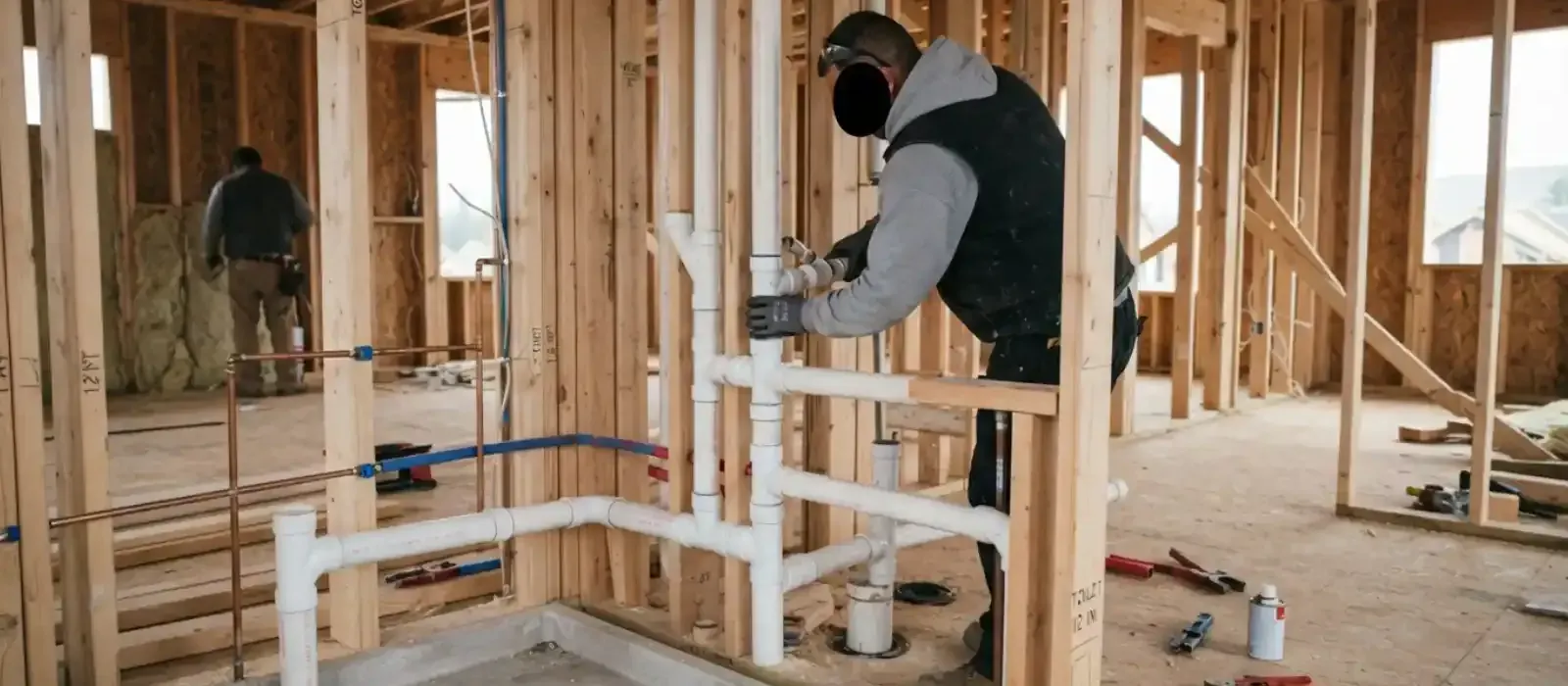
New homes follow a fixed order. Underground drains and sleeves go in before the slab or footing is closed. Rough-in comes next, with drain, waste, vent and supply pipes set inside open framing. A pressure test and inspection follow before insulation and drywall. After finishes, the plumber sets fixtures and runs final checks.
Census data counts 1,499 Clearfield homes built in the 2010s and 335 in 2020 or later, so new work here is steady. We handle the plumbing scope. Your builder controls the schedule, the framing and the inspections that are not plumbing. The same split applies to projects we do in Layton and Syracuse.
Planning a bathroom, kitchen or laundry hookup? Call (801) 207-7520 and tell the plumber the layout.
Call (801) 207-7520Gas lines: safety comes before any install
Gas appliance hookups and new gas lines are permit work in Clearfield and need a licensed plumber. They are also tested before use. This is not a job to start with a borrowed wrench.
Smell gas? Leave the building at once and skip switches, phones and anything electrical inside. Call 911 or the gas utility from outside. Enbridge Gas lists the signs as a rotten-egg smell, a hiss near a meter or pipe, or dead plants along a gas line. A carbon monoxide alarm does not detect natural gas.
How a good installation is checked
The plumber pressure-tests new supply lines before closing a wall. Drains get a water test and are checked for slope and venting. Shutoff valves are labeled and operated once so you know they work.
At the end every fixture is run. Hot and cold are confirmed. Traps are checked for slow draining. The plumber looks for weeping at each stop and supply connector, then shows you the shutoff.
Fixtures that save water
WaterSense toilets use 1.28 gallons per flush or less, while older toilets can use up to 6. Utah Water Savers offers a rebate of up to $150 for a WaterSense toilet that replaces one made before 1994, limited to two per home. About 39 percent of Clearfield homes predate 1980, so many qualify. Check the current rules before you buy.
What shapes the price of an installation
We quote after we see the site. These are the factors that move the number.
- Distance to supply and drain
- A fixture beside existing pipes costs far less than one across the house.
- Access
- Open framing, a basement ceiling or an unfinished crawlspace is cheaper than finished walls or slab.
- Fixture quality
- The fixture itself, plus any special rough-in it requires, sets a large part of the total.
- Gas, venting or electrical work
- Appliances that burn gas or need a vent or circuit add scope and sometimes other trades.
- Permits and inspections
- Permit paperwork and inspection visits are part of doing the job legally.
Insurance does not pay for planned installations. It may help when a failed fixture or supply line floods a room, because policies usually cover sudden and accidental damage and not wear. Check with your agent.
To discuss a project, call (801) 207-7520.
What we do not do under this heading
We do not design buildings, frame walls or run electrical. We do not treat septic systems. A permit is approved by the city, not by us, and we cannot promise an approval date. If your pipes are failing throughout, repiping is a separate decision.
Before you schedule an installation
Do I need a permit to install a new toilet in Clearfield?
Clearfield City's list says replacing plumbing fixtures does not need a permit, but new plumbing installations and replacement lines do. If your toilet moves or the pipes change, treat it as permit work. Ask the Clearfield City building department about your exact job.
How long does it take to plumb a new bathroom?
There is no single number. Rough-in, inspection and fixture setting happen on different days, around the framing and finish trades. We give a schedule when we price the job. Permit review is outside our control.
Can I install my own plumbing in Utah?
Utah law exempts minor repair of a fixture in a home, but not work that changes culinary water, waste or vent piping, and not first-time installation of a fixture or appliance. Gas work is also outside the exemption. When in doubt, call a licensed plumber.
Why does the plumber need 811 called before digging?
Blue Stakes of Utah marks buried utilities so a trench does not cut a line. The person doing the digging must request it, at least 3 business days ahead. Plan your start date around that wait.
Do you install gas lines and gas appliances?
Gas work is licensed, permit work and gets tested before use. If you smell gas, leave first, then call 911 or the gas utility from outside. We do not promise a response time for gas emergencies, which belong to the utility and 911.
Do you handle plumbing installation emergencies at night or on weekends in Clearfield?
Planned installs are scheduled, but the dispatch line is open 24/7. If a new connection leaks or a shutoff fails after hours, call (801) 207-7520. Shut off the main, keep people away from wet electrical areas and wait for dispatch to confirm the next step.